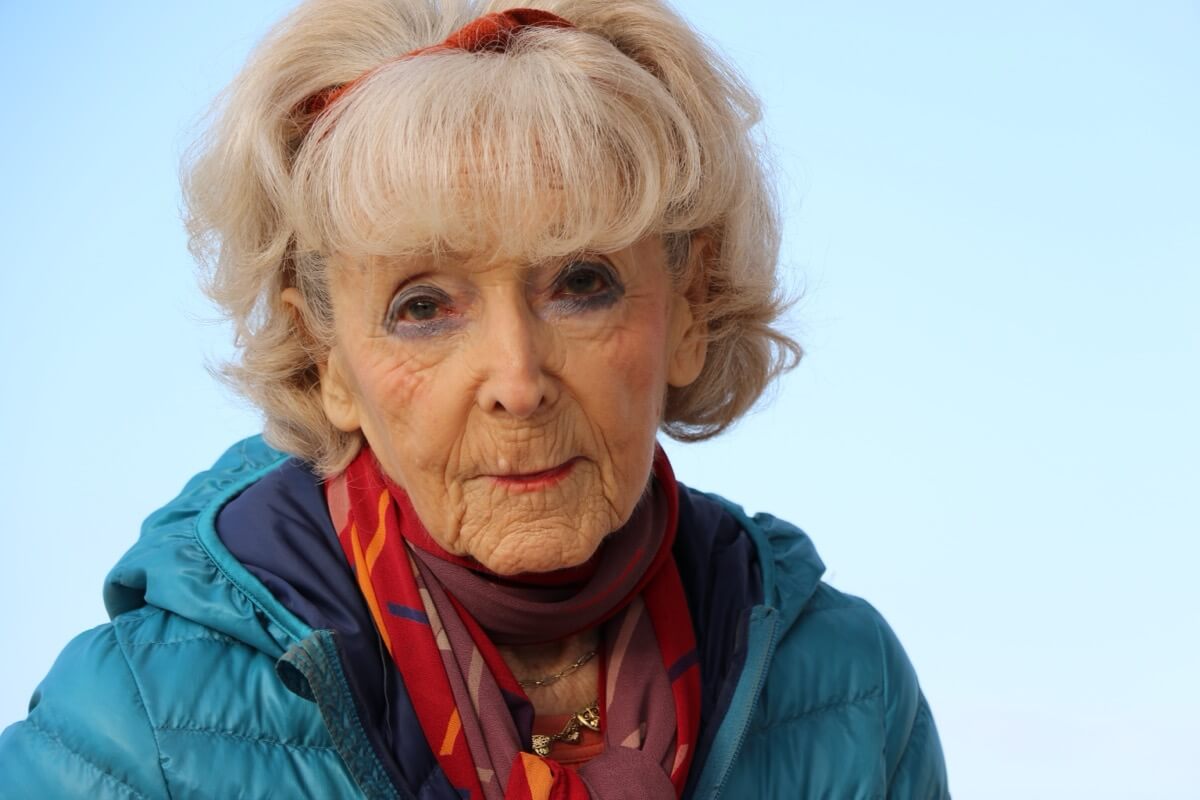
Janine NESSLER (née Janine NETZLER) was born in August 1925 in Mantes-la-Ville, then a small town in the department of Seine-et-Oise (now Yvelines). She grew up in Paris, in the 17th arrondissement, where her curiosity and artistic sense were awakened very early.
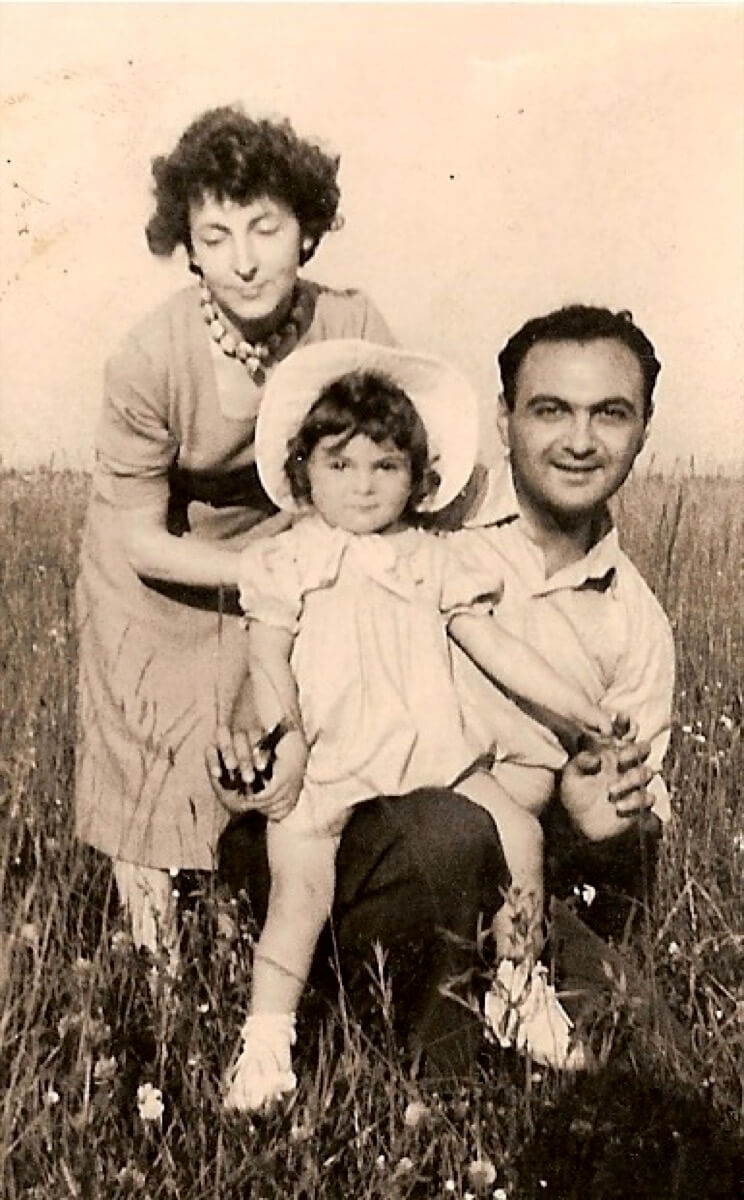
Her mother, from a rural French background, instilled in her a strong work ethic. Her father, a Romanian Jewish lawyer who spoke French, fled the pogroms in his country to find refuge in the land of "human rights." Attentive to his daughter's early passion for drawing and color, he gave her her first "artist's kit": a simple but pivotal gesture.
In the early 1930s, during a family holiday in Brittany, young Janine met Luce Paris Hilsum, a painter, who would become her "godmother at heart" and would encourage her throughout her creative journey.
The war disrupted this balance. Anti-Semitic laws and the increasing number of denunciations forced the family to leave Paris for Nice, where Janine nevertheless continued her studies and obtained her first baccalaureate. Her father died tragically shortly before the invasion of the unoccupied zone. In 1942, the family narrowly escaped the August roundups, finding refuge in Oloron-Sainte-Marie. Armed with false baptismal certificates, she then made her way to Paris. At nineteen, Janine witnessed the Liberation of Paris and volunteered at the Hôtel Lutetia, which had been transformed into a reception center for survivors of Nazi camps.
We invite you to turn on English subtitles.
As soon as the war ended, she enrolled in several renowned Parisian workshops – La Grande Chaumière, Julian, André Lhote, Fernand Léger – then in 1945 she joined the École nationale supérieure des Beaux-Arts, in the Narbonne workshop, where she met Bernard Buffet, who was admitted the following year.
She then developed a personal style, nourished by her learning and a deep inner demand.
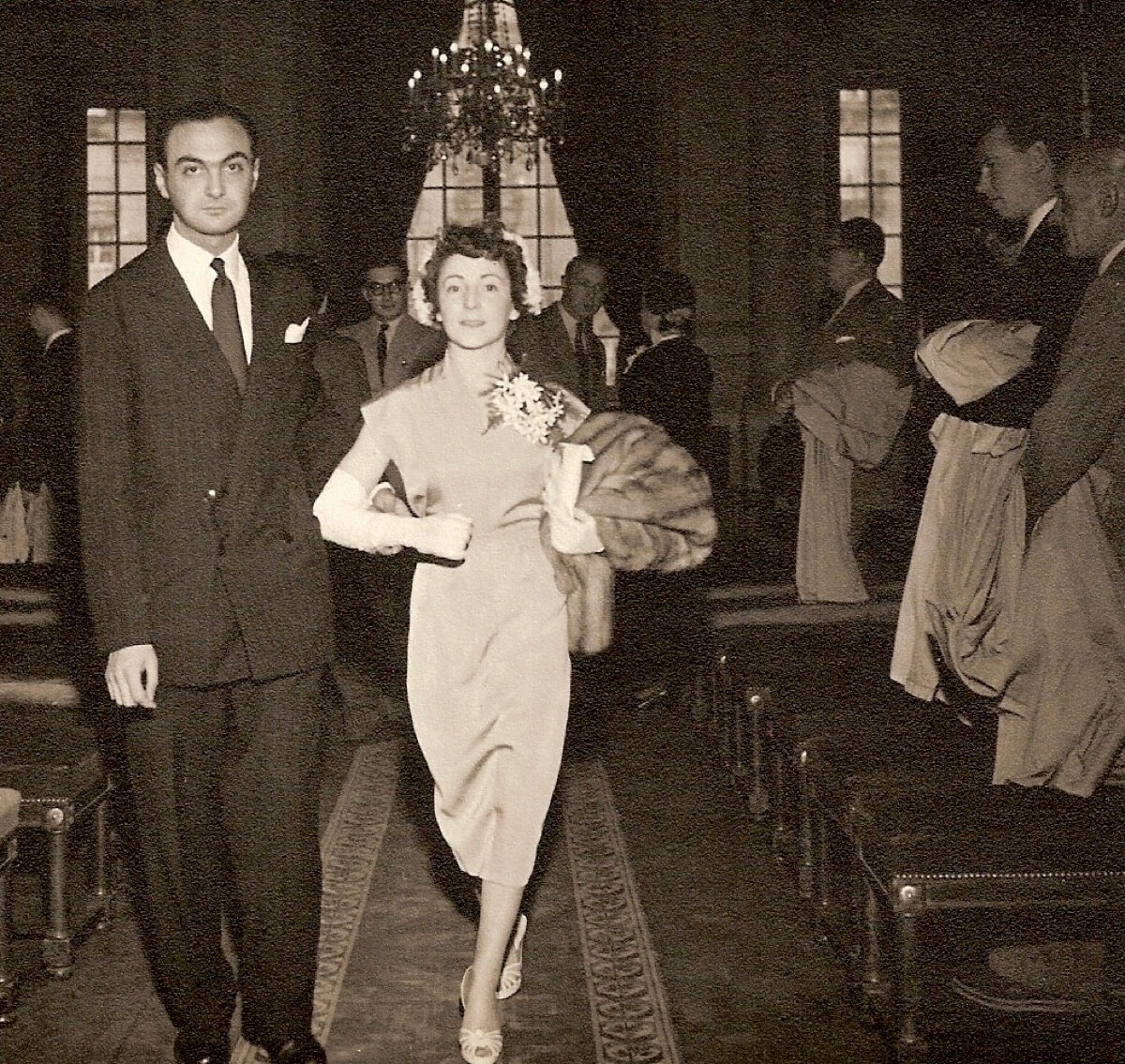
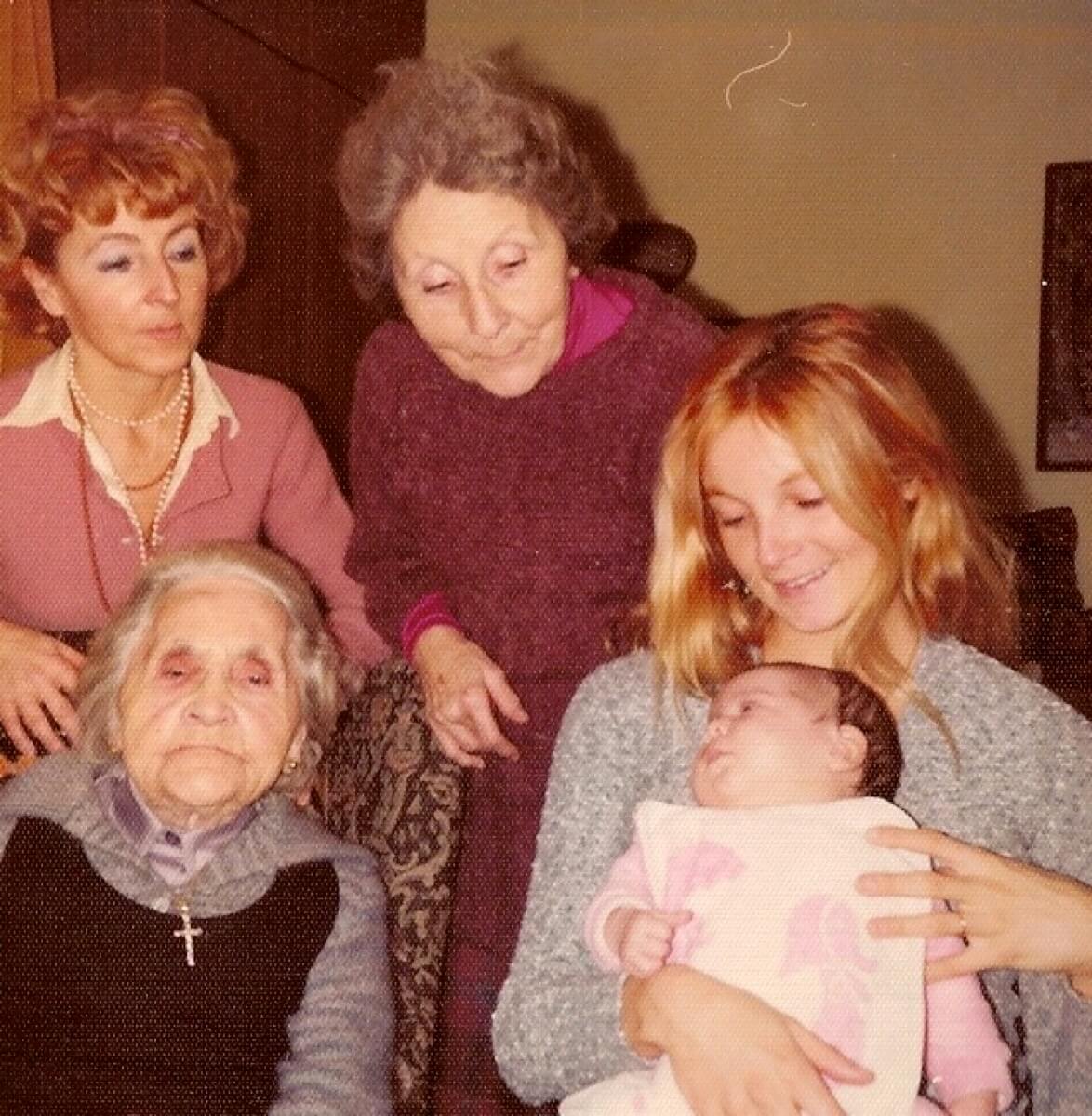
After creating batiks for a renowned Alsatian fabric designer and painting steelworkers during a residency in northern France, she returned to Paris. There she met Roger Azoulai, an engineer of Egyptian origin, whom she would later marry. Together they had a daughter, Nadine.
In the late 1950s, the family moved to a place near the Tuileries Garden, where Janine set up a bright studio conducive to her creative work. In 1967, she shared this space with the Greek painter and engraver Babis Retzepopoulos, a political refugee, who taught her the technique of engraving.
His stays in Corsica, the Maghreb, Greece, and then, from 1972, in the family home in La Cadière-d'Azur, nourished his work with a diversity of landscapes, faces and lights.
Throughout her career, Janine Nessler participated in numerous exhibitions – Salon National des Beaux-Arts, Salon des Indépendants, Salon des Artistes Français, Salon des Femmes Peintres, Salon d'Automne (of which she was a member), Salon Populiste, Salon Comparaisons…
She exhibits in numerous galleries in Paris, Lisbon and New York; her works are included in private collections in France, Japan, the United States, Switzerland and Belgium.
Winner of the Fénéon Prize, the Portrait Prize and the Kahnweiler Prize, she receives several public commissions from the Ministry of Culture and the Civic Information Center.
After the death of her husband in 1992, she left Paris to settle permanently in Saint-Cyr-sur-Mer, in the Var. There, she devoted herself fully to her art, deepening her quest for a painting free from all influence, seeking to reach an inner truth, a beauty "beyond painting itself".
Janine Nessler passed away at the age of 100 in April 2026, at the twilight of a life of creation, faithful to the end to her search for artistic fulfillment, in a painting that became a language of light and emotion.
 Français
  English